Five Questions for Bernardo Silveira
Bernardo Silveira has joined the Department Professor of Applied Microeconomics.
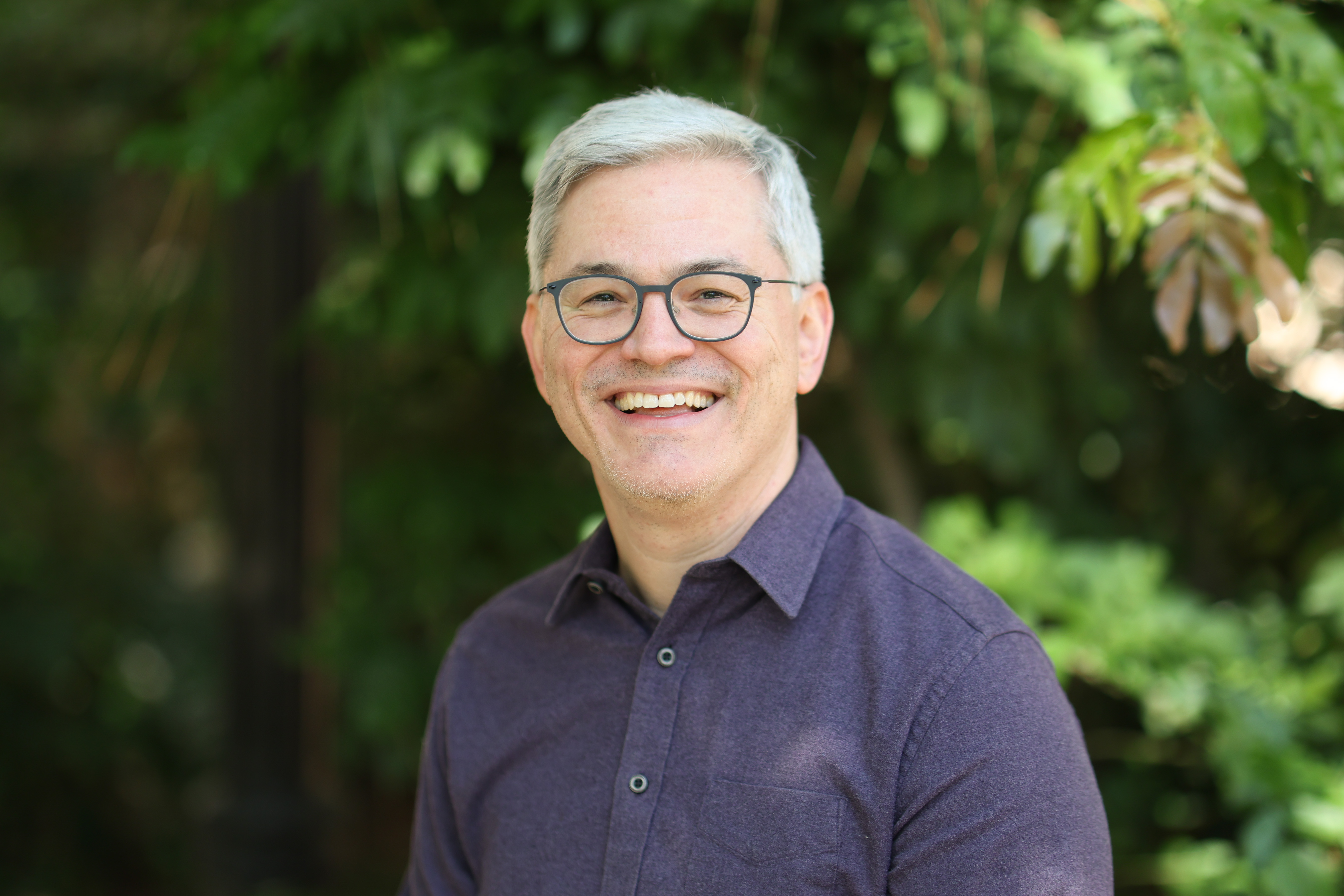
Bernardo Silveira has joined the Department as of July 1st, as Professor of Applied Microeconomics.
What are the topics you are currently working on?
Most of my research is about the empirical analysis of settings where information problems, such as moral hazard and asymmetric information, are central. Over my career I have looked at how these issues affect the enforcement of regulations, the resolution of legal disputes, and the outcome of negotiations. Recently I have been studying how they shape pay in professional services.
The starting point is a gap that has drawn a lot of attention among economists: workers are often paid less than they contribute to their firm, something we call a wage markdown. The literature has largely focused on one explanation, employer market power: because workers have few outside options, firms can pay them below their contribution to revenue. Markdowns of this kind are bad news, as they misallocate resources in the economy.
I study a second mechanism that can produce the same gap for very different reasons. Firms often backload pay, so that employees earn less than they contribute early in their careers and more than they contribute later on. This gives junior employees incentives to perform: those who do well stay on and collect the higher wages that come with seniority. The gap that shows up early is therefore not, in expectation, a lasting transfer from workers to firms.
What is the main contribution of this work?
In "Monopsony and Backloaded Compensation: Theory and Evidence from Public Accountants", we use detailed data on U.S. public accounting firms and find this pattern: very large markdowns for junior professionals, while senior accountants receive more than they contribute. That is consistent with backloading, but it does not by itself rule out market power. So we bring to the data a model in which both forces operate at once. Both turn out to matter. Firms in this industry do exercise market power over their employees, and it does push wages down; at the same time, if that power were removed entirely, roughly 60 percent of the markdowns experienced by junior workers would remain.
The practical upshot is that policies compressing pay within firms—minimum wages, pay ratio caps—act on two different things at once, and only one of them is employer power. That is, their design also needs to reckon with worker incentives. The same logic plausibly extends to law and consulting, and to other high-wage careers with steep seniority ladders.
Is there another important specific work of yours that you would like to mention?
In a separate, ongoing project, we examine the long-term incentives provided by employment contracts in a very different setting: police departments in the United States. Officers there face pressure to improve measured performance, often in the form of arrest statistics. Using data from Los Angeles, we find that these metrics do affect officers’ promotion prospects, and that officers respond by making more arrests. But the response is modest, which suggests that intrinsic motivation plays an important role in shaping professional behavior in settings like these. We also find that the arrest increases these incentives produce go together with a rise in reported crime. One possible explanation is that officers prioritizing arrests take effort away from other crime-reducing activities, such as patrolling. The evidence is a caution against judging incentive schemes only by the behavior they are designed to elicit.
You have recently joined UZH, what motivated you to come to Zurich?
My work sits between different fields in applied microeconomics—industrial organization, law and economics, political economy, and labor—and there are not many departments where all of those are strong at once. At most places, you end up choosing a "home" field and visiting the others. Zurich is a clear exception: the intellectual diversity here is fantastic. On the personal side, my wife and I have family in Portugal and Italy, and it feels good to be a short flight away rather than a long one.
Who is the inspiration behind your work?
As an academic economist, I have had the honor of getting to know many of my heroes. One I never had the chance to meet is Jean-Jacques Laffont, who died in 2004. Much of what I do—taking models of information and incentives to real data—exists as a research program because of him.