Stimulating the Brain to Promote Altruism
Synchronizing activity in certain brain regions can significantly increase people’s altruistic behavior, a new study shows.
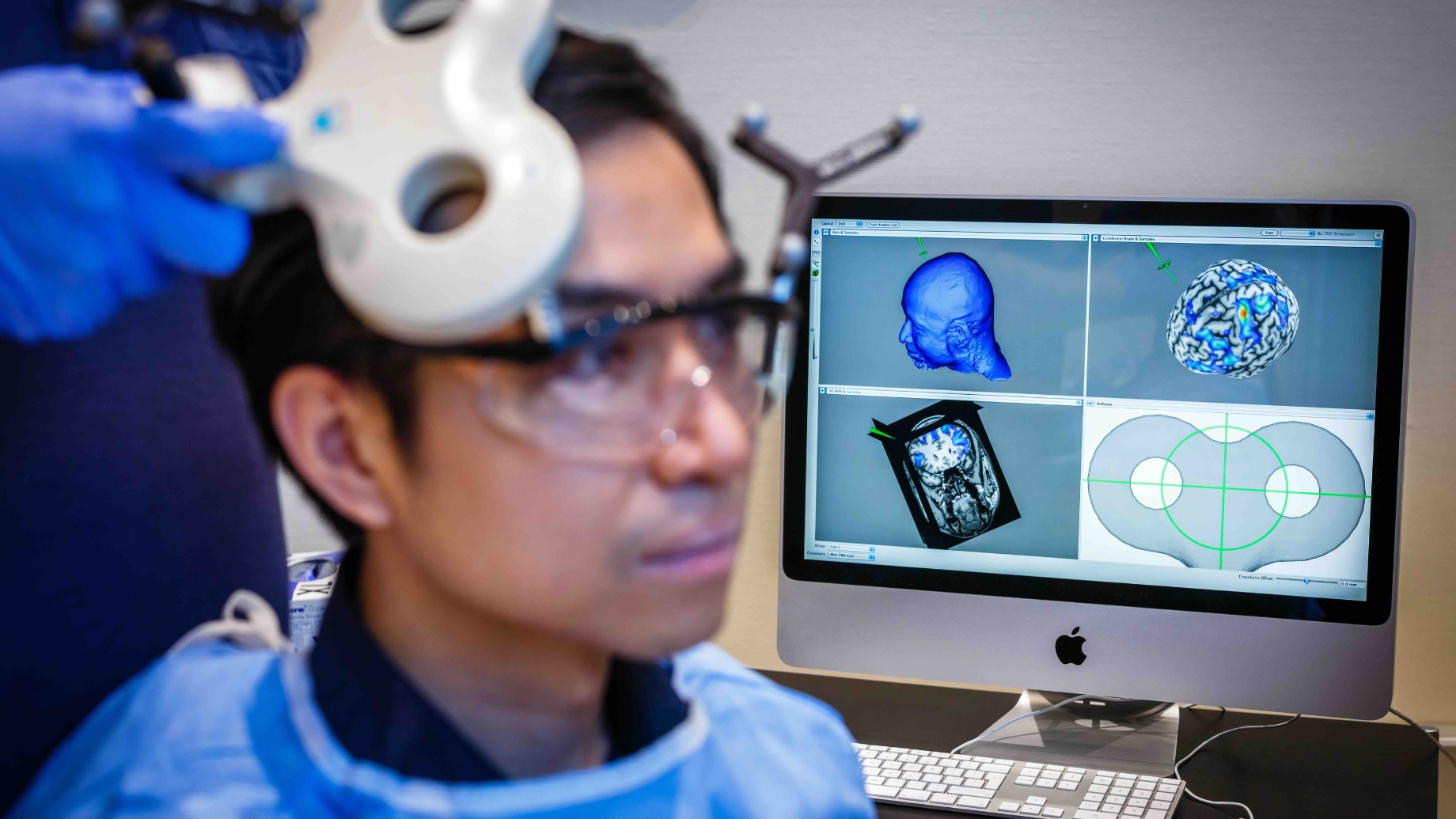
What if being kind and empathetic were not just a matter of personality or education, but also of how specific parts of the brain function and interact with each other? Using non-invasive brain stimulation, a team of neuroeconomists from UZH (Marius Moisa and Christian Ruff) and East China Normal University, showed synchronizing activity in certain brain regions can significantly increase people’s altruistic behavior.
The origin of altruistic behavior: The brain
It is now widely recognized that selfishness - the lack of altruistic behavior - creates serious problems for both individual interpersonal relationships and society as a whole. Consequently, understanding the brain mechanisms underlying altruism and developing effective ways to enhance it have become crucial research purposes.
Although earlier studies have investigated these mechanisms, there has been limited evidence that the neural pathways supporting functional interactions between brain regions are causally relevant for altruistic behavior. To address this gap and better understand how the brain activity supports social decisions, the researchers explored whether and how the communication between two specific parts of the brain have an impact on altruistic behavior.
A novel research approach
To investigate which brain regions and neural pathways might explain individual differences in altruism, the researchers recruited 44 participants who each completed 540 trials of a so-called “Dictator Game” – an experiment where one person decides how to split money with another who has no choice in the outcome and where participants can choose to keep more for themselves or allocate more to their partner.
As participants played the game, researchers stimulated two brain regions using transcranial alternating current stimulation (tACS): a part of the frontal lobe and a part of the parietal lobe, which had both shown coordinated activity in a previous study when participants took altruistic choices during the Dictator game. During the study, brain stimulation was used to make neurons in these two regions fire together in rhythmic patterns, entraining them to either gamma or alpha oscillations, confirming that the coordinated activity in these two regions indeed causes people to be altruistic: “When we increased synchrony between frontal and parietal regions, participants were more likely to help others, even when it came at a personal cost.”, according to Marius Moisa.
For the first time, researchers were able to show that synchronizing gamma oscillations in the frontal and parietal lobes made participants more likely to act altruistically, meaning they were, in the experimental setting, willing to give more money to others, even at a personal cost. “We were struck by how boosting coordination between these two brain areas led to more altruistic choices.”, commented Moisa.
Future research and societal impact
Even though the researchers managed to identify a pattern of communication between brain regions that is tied to altruistic choices, they also acknowledge a limitation to their studies, yet to be further investigated: they did not proceed in recording brain activity during the trials. Therefore, future studies should combine brain stimulation with electroencephalography (EEG) to show the direct effect of the stimulation on neural activity.
Overall, these findings “improve our basic understanding of how the brain supports social decisions”, so Christian Ruff. And regarding the broader impact for society, “it sets the stage for future research on cooperation – especially in situations where success depends on people working together.”, Ruff continues.
These new findings could also have further important implications for clinical neuroscience. Difficulties in processing and integrating information about others can contribute to behavioral problems in psychiatric and neurological disorders, including autism and psychopathy. Therefore, this novel approach may offer a promising first step toward developing interventions to improve social functioning in affected individuals.
Hu J, Moisa M, Ruff CC (2026) Augmentation of frontoparietal gamma-band phase coupling enhances human altruistic behavior. PLoS Biol 24(2): e3003602. https://doi.org/10.1371/journal.pbio.3003602
PLOS Biology: https://plos.io/457RtCK