Water Pollution from Mines Directly Affects Agriculture
A new study shows that plants and crops in Africa are less healthy downstream of mining sites. Data on their impacts remains scarce, requiring better reporting for effective mitigation.
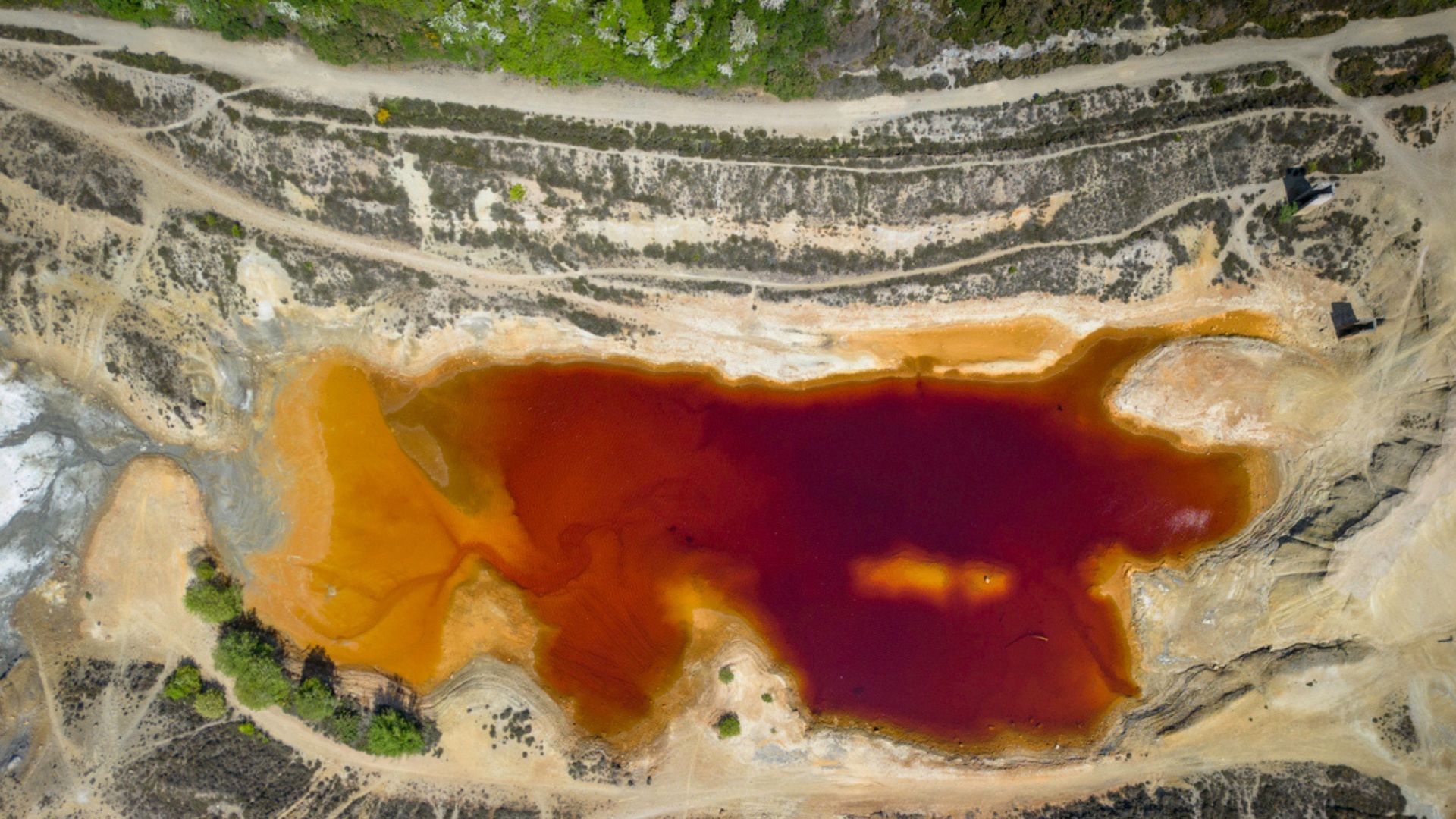
Mines have a huge environmental impact, including on water flows. A new study shows that plants and crops in Africa are less healthy downstream of mining sites, with the largest impacts in fertile, densely vegetated areas and regions dominated by gold mining.
Mining in Africa is expanding rapidly, partly driven by demand for minerals to clean energy transition. While mines can promote local economic development, they also generate pollution that harms surrounding areas, especially where regulation is weak. In a recent publication, Gustav Pirich, a doctoral student at our department and his co-authors* show that mining-induced water pollution reduces vegetation health downstream, leading to substantial agricultural losses.
Mineral extraction requires large amounts of water, which mixes with disturbed soil and rock to form tailings. As tailings weather, they release pollutants into nearby waterways. Combined with chemicals such as mercury or sodium cyanide used in extraction, these pollutants contaminate groundwater and farmland, inhibiting plant growth and damaging ecosystems.
Assessing water pollution from mines
Direct measurements of water contamination and farm yields are scarce across much of Africa. Using topography, the researchers identify areas affected by water flows from a mining site: water flows downhill, not uphill. This methodology has been used by hydrologists to construct river-basin datasets that map drainage from any point (Lehner and Grill 2013). They classify locations as downstream of a mine (receiving its water) or upstream (not receiving it). Figure 1 shows two basin chains around mines.

- Figure 1: Chains of river basins around two mines in Angola
The authors of the study then compare upstream and downstream catchments to identify water-transmitted effects, but simple comparisons can be biased by confounders (for example, downstream areas may contain larger urban settlements). They therefore focus on the immediate surroundings of mines and account for key confounders to estimate the average effect of mine-related water pollution.
Administrative data on mines and agricultural production are scarce. The researchers therefore use satellite-based mine delineations (industrial and nearby artisanal/small-scale mines; Maus et al. 2022) and measure vegetation quantity and health using land-use maps and the Enhanced Vegetation Index (EVI).
Mining in Africa reduces vegetation downstream
Their analysis shows that vegetation is less healthy downstream of mines, for both overall vegetation and croplands. Figure 2 summarises their main results: vegetation health changes little upstream but drops sharply just downstream of the mine, remaining lower for several basins before fading with distance.
-
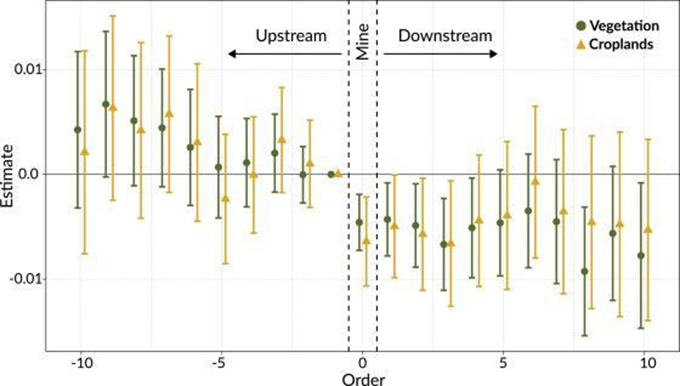
- Figure 2: Average treatment effects
They contextualise this decline using survey-based production data where available (IFPRI 2020; Bentze and Wollburg 2024), and conservatively estimate annual cereal losses of 91,000–205,000 metric tons, corresponding to roughly 5–12% of the African food aid distributed by the World Food Programme in 2023.
These are average effects across diverse settings. Impacts are strongest in Western Africa, in denser vegetation, and in areas highly suitable for crops; they are also larger where gold mining predominates. Mine size and growth do not appear to systematically change the downstream impact.
Implications for mining policy
Regulatory oversight for mining operations is weak, especially in areas most affected by pollution. Tailings containment facilities are often missing or poorly maintained (Macklin et al. 2023), and many mines operate informally. These findings underscore the need to regulate harmful substances (e.g. sodium cyanide) and ensure long-term tailings containment for industrial and artisanal mines.
Data on mines and their environmental impacts remain scarce: information is limited for artisanal and small-scale mines and often sparse even for large industrial operations. Satellite-derived measures for mines and agriculture are broadly comparable but coarse approximations. Better reporting and data would strengthen responses to environmental risks and improve mitigation.
* Lukas Vashold, Gustav Pirich, Maximilian Heinze, Nikolas Kuschnig, Downstream impacts of mines on agriculture in Africa, Journal of Development Economics, Volume 179, 2026.