NZZ Interview
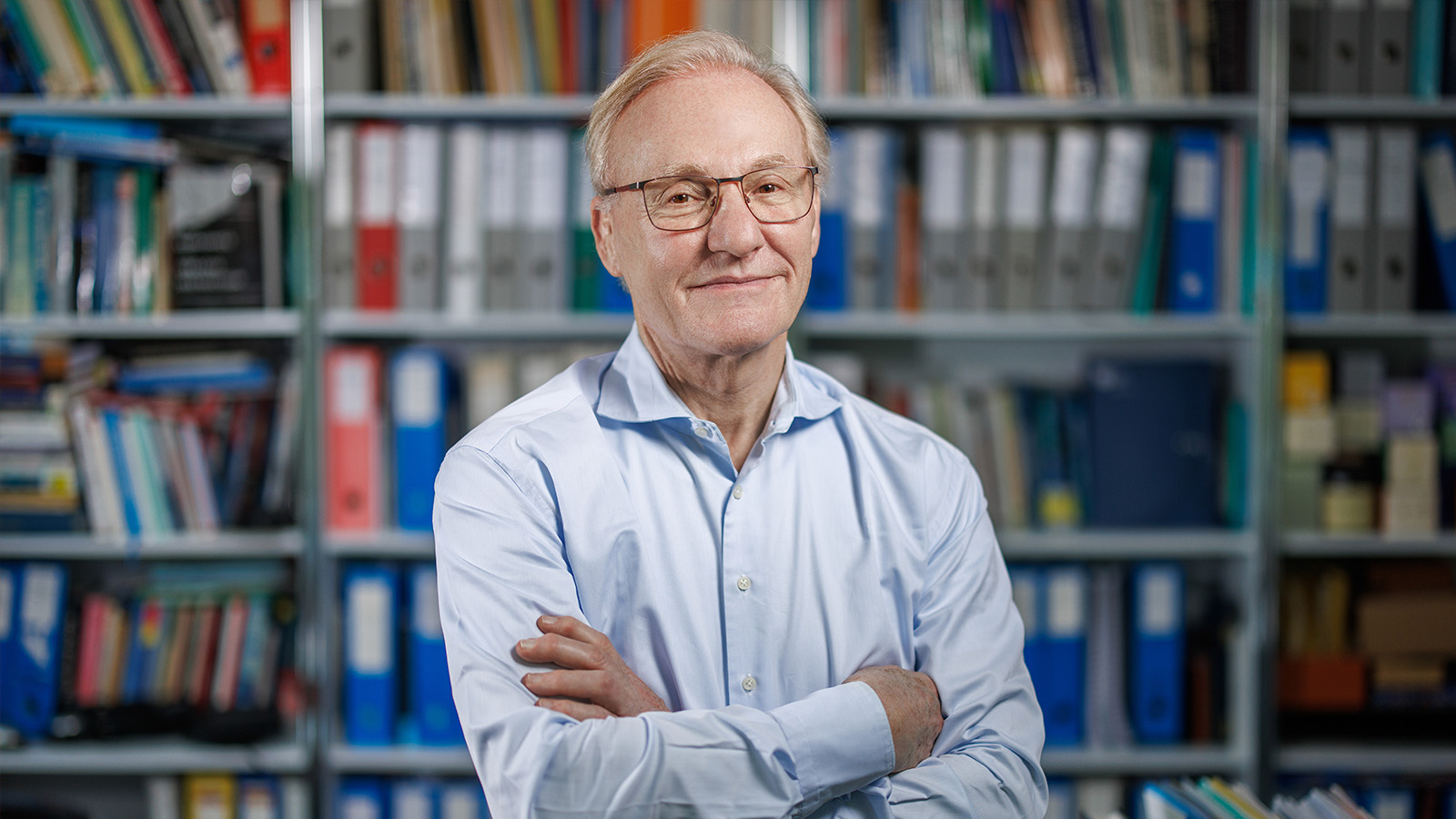
“I am concerned about the resilience of democracy.”
The most cited economist in the German language area conveys a positive message: human beings are not purely self-interested. In doing so, he revolutionized the way his profession analyzes the world.
Ernst Fehr was never interested in confirming the prevailing consensus. While economists were refining the model of the fully rational homo economicus in the 1980s and 1990s, he used experimental studies to demonstrate that other motives often shape human behavior. His work contributed significantly to the emergence of behavioral economics. Raised in Vorarlberg, Austria, and employed at the University of Zurich, this dual citizen of Austria and Switzerland has become the most cited economist in the German language area. The American Economic Association, the leading professional organization in economics, named him a lifetime honorary member in 2017.
Fehr, who frequently conducted research and taught in the United States, turned down offers from top international universities such as Princeton and Berkeley. Instead, he spearheaded the transformation of the previously very traditional economics group into the Department of Economics at the University of Zurich. Today, it ranks among the world’s leading institutions in economics. The Excellence Foundation Zurich, founded by Fehr, played a major role in this development. It not only convinced UBS to make a major donation, but also persuaded numerous other donors to strengthen Zurich’s position in the international competition for top talent and academic excellence. Today, Fehr serves, among other roles, as Chairman of the UBS Center of Economics in Society.
To mark Fehr’s 70th birthday, the University of Zurich is hosting a conference next week, to which five Nobel laureates and leading scientists from around the world will travel. Fehr has asked all speakers to outline what they consider to be the most important open research questions. The honoree himself remains curious and prefers to look ahead, as he demonstrates in this interview.
Mr. Fehr, no other economist in the German language area is cited as often as you are. Which pertinent questions have you addressed in your work?
I have always been interested in fundamental questions. A central problem in economics is the concept of homo economicus – the assumption that people act purely out of self-interest. While many economists once knew that this was not the whole truth, they had internalized this view. Scientific findings, however, show that people are also motivated by fairness, justice, and the well-being of others.
Can you give an example?
When I ask for directions at the Zurich main station, there’s always someone willing to help me. That person sacrifices a minute of his or her time and incurs costs, even though he or she does not personally benefit from it. This shows that people constantly help one another, often without any direct benefit. That may sound obvious. But the interesting question is how to prove it scientifically. Economists usually explained altruistic behavior in terms of self-interest, such as the desire to make a good impression on others. Our research, however, shows that people often act fairly and decently even in situations where they derive no personal benefit.
How did your colleagues initially react to your work?
When I was still a research assistant, people would say: “Isn’t that the researcher who attributes crazy preferences to people?”
You were ridiculed.
Yes, I wasn’t taken entirely seriously, because criticism of homo economicus has far-reaching consequences for the economic understanding of the economy and society. If people are motivated differently than assumed, then we do not understand the world correctly either.
How is it possible that economics ignored this for so long?
For a long time, helpfulness and commitment were primarily attributed to reputation or long-term self-interest. These motives might play a role. My argument, however, is that altruistic motives are also important. Billionaires like Warren Buffett or Bill Gates have donated huge sums to foundations.
Perhaps they are buying social peace with it. Donations as the price to be left alone.
We can always find a self-serving answer. We were only able to solve this problem by conducting laboratory experiments where we radically excluded all self-serving motives: no future relationships, anonymous interaction, and the other person did not know that you were doing him or her a favor. Even under these conditions, altruistic behavior emerged.
What are the concrete consequences of this?
If everyone were completely selfish, we would actually have to station a police officer behind every citizen. This is because there are countless situations where a person can increase his or her own benefit through illegal actions. The fact that people cooperate voluntarily relieves the burden on companies, families, and the state – for example, in law enforcement. Much of society functions because social norms are observed – and not because constant monitoring is required. In a world full of egoists, much more government intervention would be necessary to enforce social order.
But your experiments also show that there are pure egoists.
Yes, but they are in the minority. Most people have an aversion to inequality. They suffer when the outcomes are distributed too unevenly between themselves and others.
It is often said that society has become more selfish, that the willingness to work for the common good is declining. Is that true?
I am skeptical of such sweeping statements. If you address people in the right way and clearly communicate the desirability of public goods, this certainly leads to cooperation and fairness. What is important is that people trust the institutions – that is, the rules of the game in a society.
This Sunday, Switzerland will vote on a plebiscite to limit the population to 10 million (the 10 Million Initiative). The government, parliament, and nearly all political parties oppose it. Nevertheless, roughly half the population supports it. Does this reflect an erosion of trust in the country’s elites and institutions?
I haven’t examined this question in detail. What we can observe in Western democracies, however, is the rise of populist parties and the erosion of established parties. That cannot be denied. Parts of the population no longer feel represented by the political system. While simplifications and exaggerations by populist actors certainly contribute to this, many people feel – and people are not stupid – that they are no longer being taken seriously.
This alienation is also cited as a factor in the rise of Donald Trump.
Yes, the feeling of a lack of representation formed a foundation for Trumpism. In the U.S., the real income of the bottom 10 percent of the population has not improved since 1980, even though society has become richer by a factor of two or three. It doesn’t surprise me that these people no longer feel politically represented. The Democrats come across as out of touch, as do the Republicans. And Trump benefited.
Back to Switzerland’s 10 million: Does high immigration, which makes one’s surroundings seem increasingly anonymous and foreign, lead to less cooperation and more selfishness?
I don’t think so. However, there is a psychological tendency to distance oneself from strangers that is deeply rooted in evolution. Thousands of years ago, belonging to a group was essential for survival. Social exclusion was the worst punishment, because it left one unprotected and at the mercy of the dangers of nature, animals, and other humans. Politics can mobilize these fears, even if they are objectively unfounded. Thus, resistance to strangers is often the greatest where there are the fewest strangers.
It is not only the distancing from strangers that is deeply rooted. In your work, you also show that people have a deep-seated aversion to inequality. Are the welfare state and redistribution, so to speak, psychologically predetermined?
In a way, yes. Forms of social security have always existed in human communities. If someone in a hunter-gatherer society broke a leg, the group would continue to support him or her. It was like an informal social insurance. The group took care of its members, and the pressure to share was immense. From this, we can infer that the aversion to inequality is deeply rooted in the psyche – and continues to play a significant role in debates about redistribution to this day.
Can this be measured?
Yes, our research shows: In Switzerland, about 45 percent of people have a pronounced aversion to inequality. They are willing to bear costs to help those who are worse off. But they are also willing to incur costs to reduce the income of those who are much richer – even if they receive nothing from this money that they lost. It is thus not just about redistribution, but also about the destruction of income. These people are happy to spend one franc to destroy two francs of a rich person’s wealth. We can demonstrate this in the lab.
Nevertheless, a recent plebiscite from the young social democratic party, the 1:12 initiative, did not stand a chance. It demanded that no one in a company be allowed to earn more than twelve times as much as the lowest-paid employee.
Even people with a strong aversion to inequality weigh costs and benefits. They are more likely than others to support redistribution, but not at any price. If the costs are deemed too high, as with the 1:12 initiative, support declines.
Despite high costs and unclear financing, Swiss voters recently spoke out clearly in favor of a 13th Swiss social security pension payment.
People probably thought that somehow it would be financed. Moreover, the initiative was ingeniously designed from a behavioral economics perspective: Almost all employees in Switzerland receive a 13th month salary. So many people asked themselves: Why shouldn’t retirees also receive a 13th month social security payment? That was a psychologically clever reference point.
Through your research, you have helped to put homo economicus to rest. When you look to the future, where do you see unresolved issues?
I am concerned about the resilience of democracy. We should invest more resources in research in this area. In the age of fake news, populism, and polarization, this is of paramount importance. Politics must once again be able to establish and implement effective reforms. How can this be achieved more effectively, and what kind of institutions are needed? How, for example, should social networks be regulated without stifling technological progress?
And beyond that?
I’m interested in what makes people who they are. Why is someone risk-averse or cooperative? What fosters prosocial traits, and what environmental conditions foster selfish or even antisocial traits? For example, a researcher at the University of Warwick who worked in Zurich for many years was able to demonstrate that Switzerland’s direct democratic institutions have a long-term positive influence on people’s willingness to cooperate. We can also use data to show that people who were in Ukraine under the radioactive cloud following the Chernobyl reactor accident still exhibited a different level of risk aversion twenty years later than those who were not affected. The circumstances and society in which a person grows up produce individuals with certain character traits. How these traits are distributed is important for a nation’s well-being. We should know better how to influence this.
That’s almost reminiscent of Che Guevara, whose socialism also sought to create a new human being.
Che Guevara had completely naive ideas, and the system for which he was partly responsible wanted to force everyone to work for the common good. That’s not the point. But many of us are parents. We have an idea of how we should raise our children and what is good for them. Why shouldn’t society also have its own idea of what is good, provided this is discussed democratically? I believe, for example, that it would make sense to avoid antisocial behavior and senseless violence.
You yourself used your powers of persuasion to transform the Department of Economics at the University of Zurich. You internationalized it and ensured that the majority of funding and positions are no longer tied to a single chair.
After a long effort to win them over, the professors voted in favor of the measure with a ninety percent majority. They imposed a tax on themselves for the common good of the institute. This allowed us to establish a graduate school and to attract top talent.
Why was that so important to you?
It’s much more enjoyable to work in a place where there are so many talented people. You’re constantly coming up with new ideas. That attracts top talent, and the students benefit as well. It’s no coincidence that the Economics Department at the University of Zurich is now among the top three in Europe.
That also has to do with the initial 100 million and then another 25 million Swiss francs that the UBS donated to the department. And with other major donations from the Swiss business community. Doesn’t that put the independence of research at risk?
From the very beginning, we structured our agreements so that academic freedom remains fully guaranteed. For example, I wrote a highly critical essay about our experiment on moral behavior in a Swiss bank. We haven’t had a single instance where anyone tried to influence our academic research; the reputational risk would be too high.
Why do business representatives donate such large sums to you if their companies do not benefit directly?
Fortunately, there are people in the business world who want to do something for the common good and demonstrate their commitment to Switzerland as a business location.
When you recommend measures to achieve certain behavioral changes, this is also referred to as “nudging.” How liberal is it to encourage people to behave differently than they would on their own?
Most companies have an idea of how they want to reorganize and become more productive. Behavioral economics helps them get people on board and motivate them to behave cooperatively or to refrain from doing anything illegal. That is every company’s right.
Isn’t that paternalistic and contrary to neo-liberal principles?
I would now provocatively argue that neo-liberals have always been a bit blind to private power and very attentive to state power. There are good reasons for this: an employee can simply switch companies, but changing one’s country is much more difficult. Nevertheless, neo-liberals should not claim that nudging is bad simply because it happens in a state context, while it is permitted in a private context. In both cases, there are ethical limits to behavioral steering. And we must constantly discuss them.
You say one cannot simply switch countries. You yourself received various offers from top European and American universities and yet have always remained loyal to Zurich. Why?
I find Zurich and Switzerland incredibly livable. The country has good, functioning institutions. While there is bureaucracy at the University of Zurich as well, it functions better than, for example, at MIT in the U.S. I am convinced that internationalization and donations have attained results in Zurich that would not have been possible at any other university in Europe. When you come up with reform proposals in Switzerland, you usually encounter skepticism at first, but if you manage to convince people of the merits of the cause, there is a great deal of goodwill.
Original interview in German by Peter Fischer and Thomas Fuster